Gulf Coast Cast Iron · SW Florida
4-Point Inspection Failed for Cast Iron? Here’s What It Means
We read the report, camera the pipe, and quote both paths - lining and replacement - so you know what your insurer's clock actually means.
We read the report, camera the pipe, and quote both paths - lining and replacement - so you know what your insurer's clock actually means.
You are holding a piece of paper that says your homeowners policy might not renew. Somewhere in it are the words “cast iron, pre-1975.” The rest of the letter is insurance language, but you already understand the part that matters. Your pipes are the problem now.
Take a breath. This is fixable, and it is more common than you think in this part of Florida. Almost every slab home built before 1975 in Lee and Charlotte County has the same pipe under the floor.
The 4-point inspector did not run a camera down your drains. He looked at the age of the house and the visible plumbing, and he wrote down what he found.
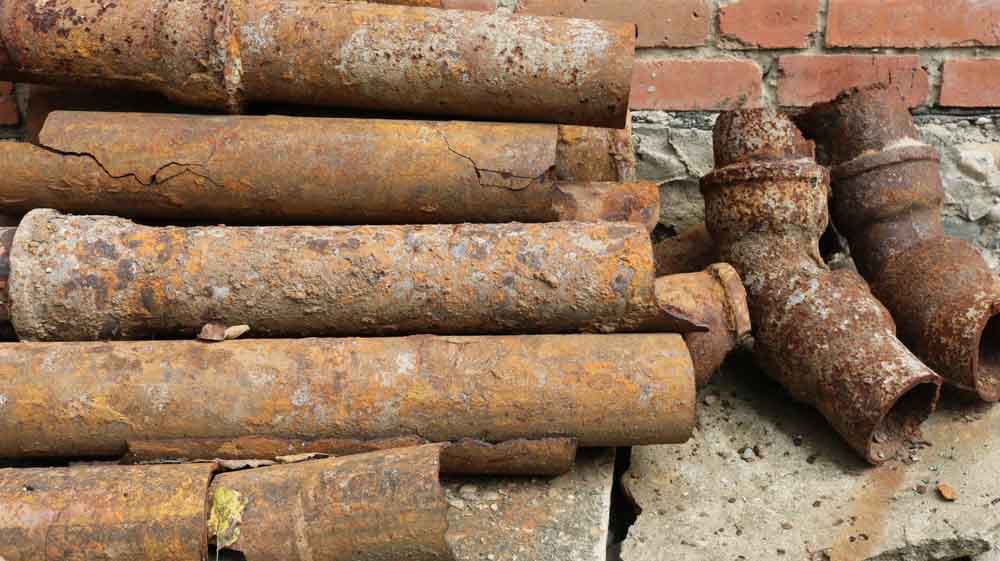
Cast iron drain pipe was standard in Florida until the mid-1970s. It was a good pipe for its era. It was not built to sit in warm, slightly acidic Gulf Coast soil for fifty years.
The inspector flagged it because insurers now treat pre-1975 cast iron as a known failure risk. He is not saying your pipe is broken. He is saying it is old enough that the insurer wants it looked at.
Once “cast iron” is in the report, the insurer starts a clock. This is the part that scares people, so here is the plain version.
They will usually do one of three things. Non-renew the policy at the end of the term. Renew but exclude water damage from the pipes. Or renew on the condition that you replace or line the plumbing within a set window, often 30 to 60 days.
Most homeowners are surprised to learn the insurer rarely wants proof the pipe is failing. They want proof it is gone or protected. A camera report plus a plan of repair is usually what satisfies them. We walk through those specifics in our guide to the insurance non-renewal timeline.
Cast iron under a slab fails from the inside out. Two things do most of the damage.
Water and waste run along the bottom of a horizontal pipe. Over decades that flow erodes a trough. The top of the pipe can look almost new on camera while the bottom is worn down to paper. This is why you cannot judge cast iron by a quick glance.
Rust builds in layers on the inside wall, then flakes off in scale. The scale snags waste and narrows the pipe. You get slow drains and backups long before a full collapse. We break both of these down further in cast iron spalling explained and why cast iron fails in Southwest Florida.
There are two real fixes. The right one depends entirely on what the camera shows, which is why we never quote before we look.
Trenchless lining. If the pipe is structurally intact with isolated damage, we cure an epoxy liner inside the existing pipe. No floor demolition. This is the cheaper path, and for a lot of homes it is the honest answer. See trenchless cast iron lining.
Full replacement. If the run is channeled through, crushed, or collapsed, a liner has nothing to grip. You need new pipe. That means under-slab access and PVC. It costs more, and sometimes it is the only thing that lasts. See cast iron pipe replacement.
Here is what we do differently. Most companies in this area sell one of those two answers. A lining company will find a way to line it. A repipe company will find a reason to dig. We are neither. We camera first and quote both, then tell you which one we would do if it were our house.
A 1968 slab ranch off Del Prado, original cast iron, flagged on the 4-point at closing. The seller was told to expect a full repipe. The camera showed the mains were channeled but the branch lines were still solid. We lined the bad run under the slab and left the good pipe alone. It came in well under half of what a full repipe would have cost.
That is not a promise your job will go the same way. It is the reason we look before we quote.
Send us your 4-point report. We will read it and tell you what it actually means for your pipes, before anyone sends a camera or a crew. Upload your report here.
Upload the report or a photo of the pipe. We will read it and tell you what it actually means for your pipes - repair or replace, honestly, no site visit needed. We respond within one business day.